A workshop that supports changes in individual behavior and mobilizes a collective
The human factor to increase our capacity to change behaviors
In psychology, the human factor concerns “the mechanisms that exist between what is perceived by humans and the conscious or unconscious reactions that result from it.”
In the 1950s, economists sought to measure the human contribution to economic development by introducing the concept of human capital. Unable to measure the positive effects of attention to the human factor, it was reduced to the innovation factor, and the human factor was associated with human error.
The focus has shifted to controlling the event whose occurrence is to be avoided, focusing on why it is so difficult to undertake effective risk prevention efforts to limit their occurrence. « The fucking human factor is what prevents us from moving from what we know to what it implies, » astrophysicist Hubert Reeves explains .
William Schutz , author of The Human Element, believed that untapped human potential can lead to extraordinary achievements . According to him, what happens to us depends primarily on ourselves because each individual can choose to be aware of their behaviors, feelings, thoughts, and beliefs.
If there is one area where knowledge is particularly necessary, it is that of our own functioning according to Jacques Fradin of the IPCC, the network of behavioral scientists.
Learn more about the concept of human factor
Why is it so difficult to change behaviors?
We all see in our businesses or local communities that just because people are convinced of the need to change their behavior in the face of ecological issues does not necessarily mean that change will happen.
Behavioral scientists tell us that simply being convinced isn’t enough to adopt new behaviors, and that even when motivated by the desire to change, the road to success is long and fraught with unsuccessful attempts. Overcoming failure requires a deep understanding of the often unconscious factors that limit our ability to change behaviors.
Changing behaviors to adopt new ones requires individual effort. This individual effort, which must also be collective, requires adopting a specific change support posture to successfully carry out a transformation plan in one’s organization .

The transformative experience of the human factor fresco
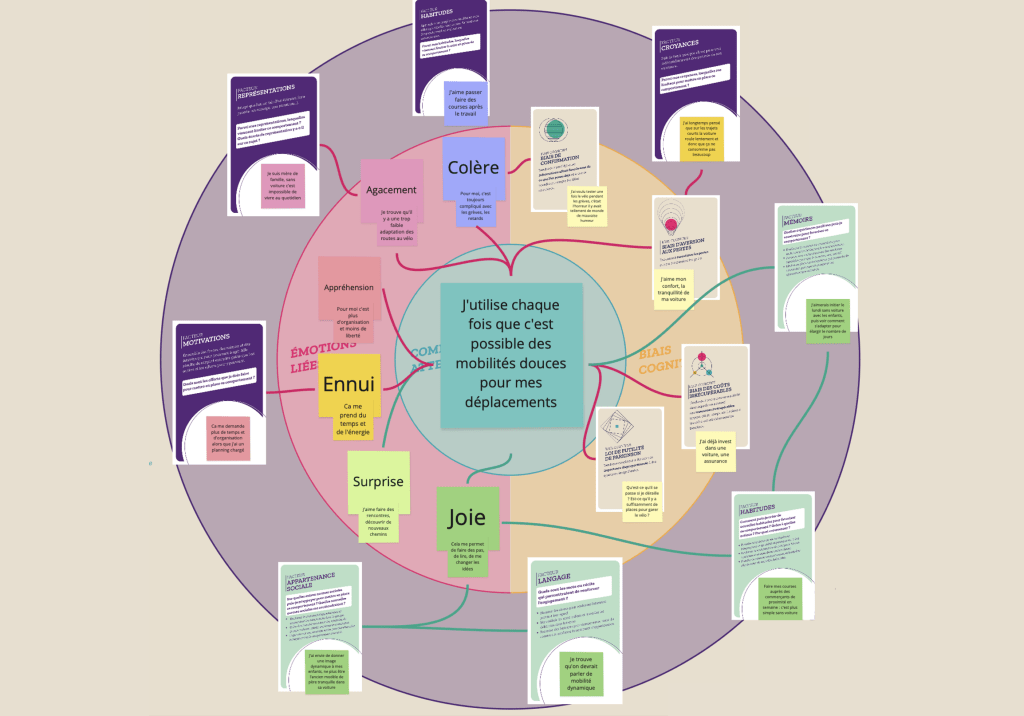
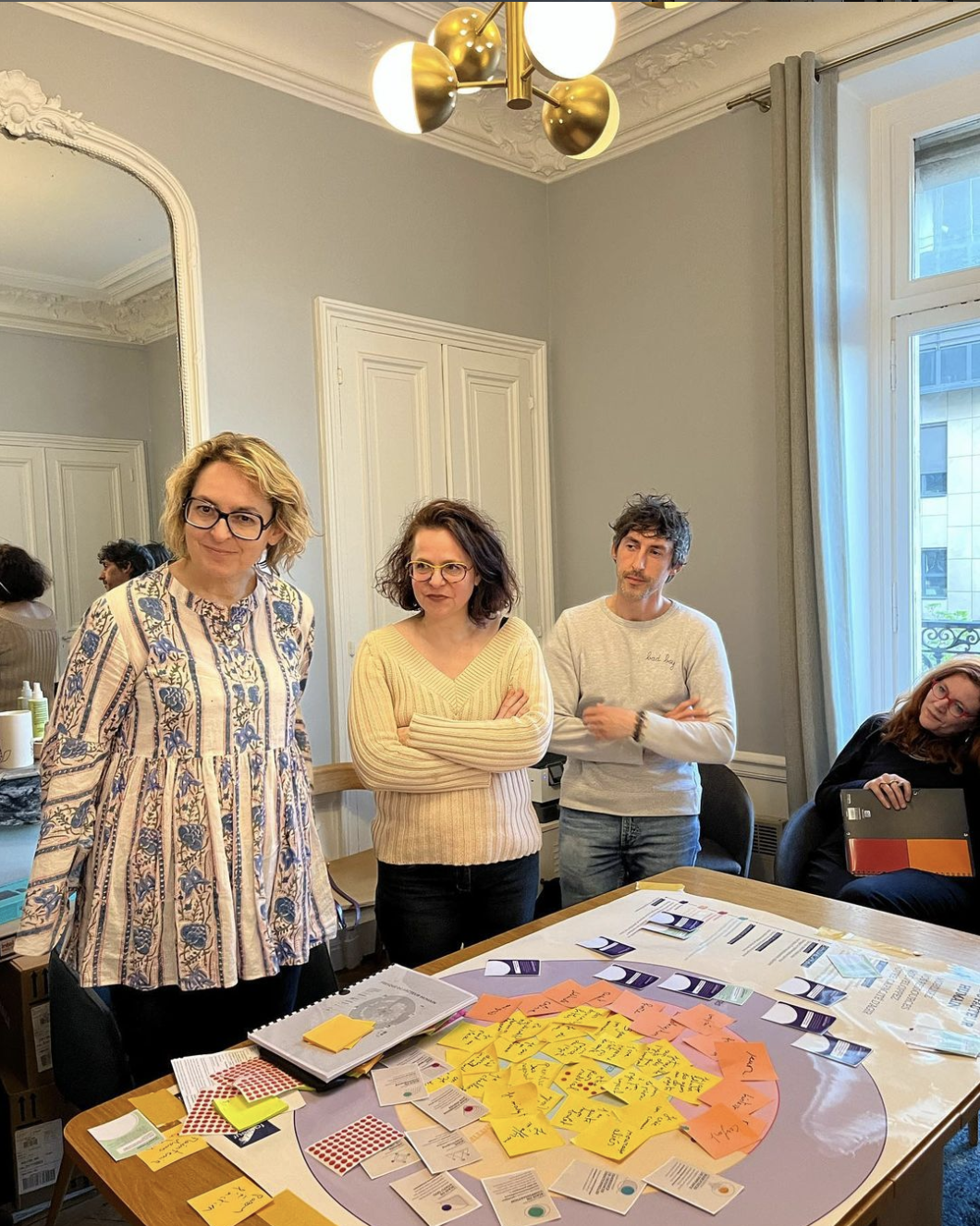
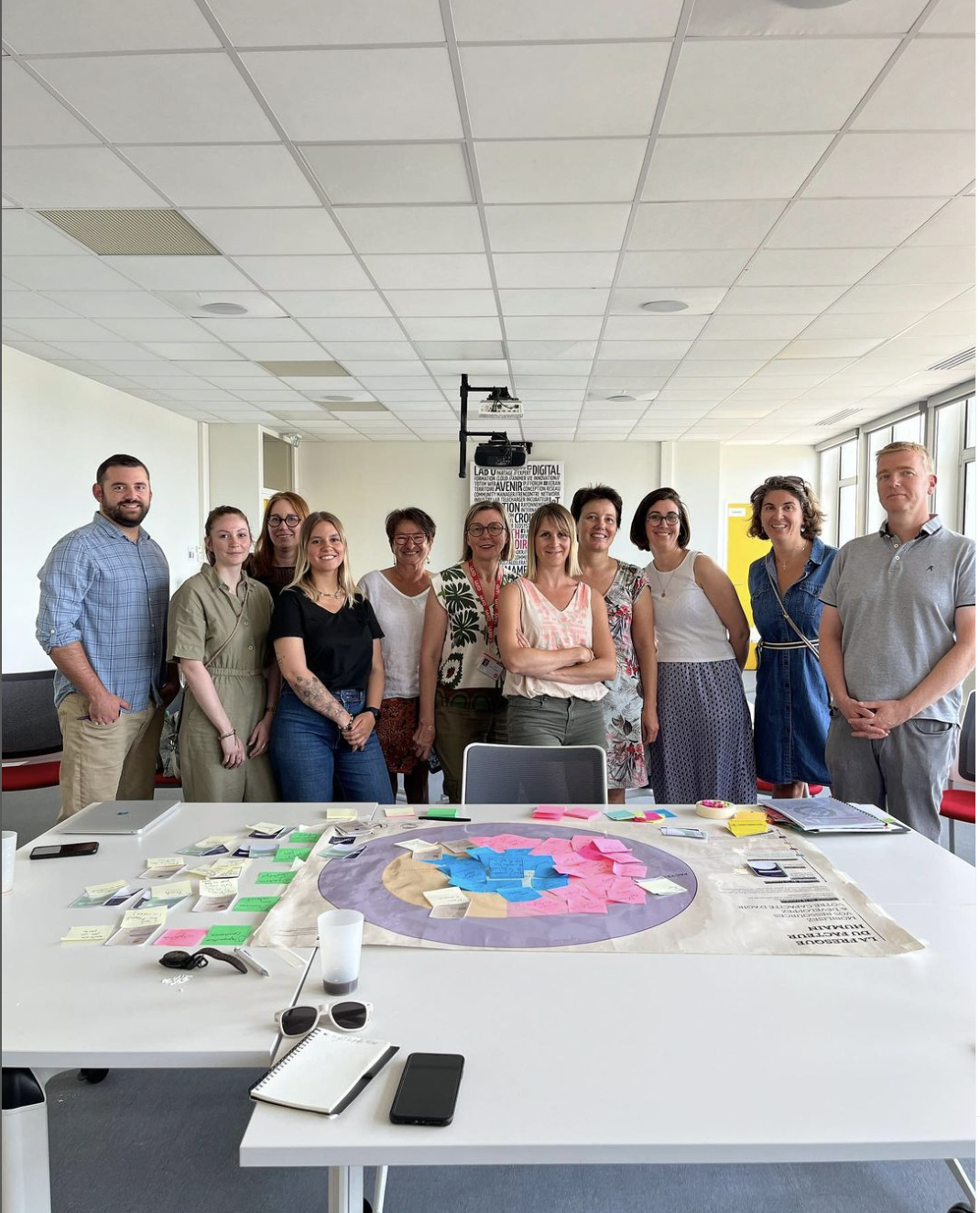
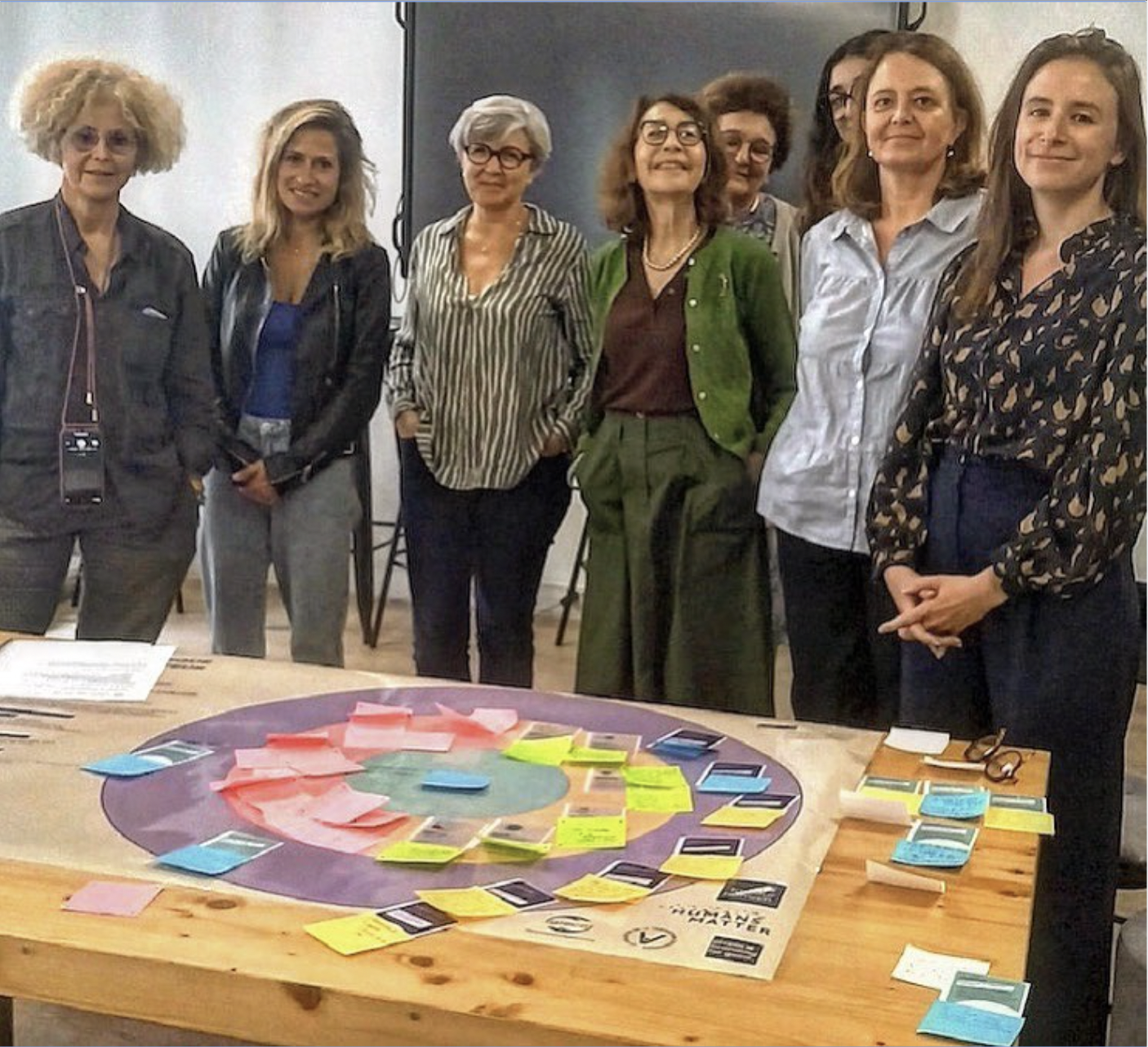
The human factor fresco helps facilitate changes in behavior initiated at the individual or collective level.
It helps us become aware of the factors of change/non-change in behavior that often act without our knowledge and hold us back in our efforts (from emotions to cognitive biases and beliefs, etc.) in order to make them levers that we can all use when we seek to adopt new behaviors.
It is thematic and participants choose a behavior on which to progress: taking responsibility, mutual aid so that collaboration becomes the norm, energy sobriety, taking care of nature, etc.
It concludes with a 5-step individual and collective action plan to facilitate the desired behavioral changes. It thus provides guidance for change leaders in businesses, organizations, and local communities.
A 5-step action plan at the end of the human factor fresco
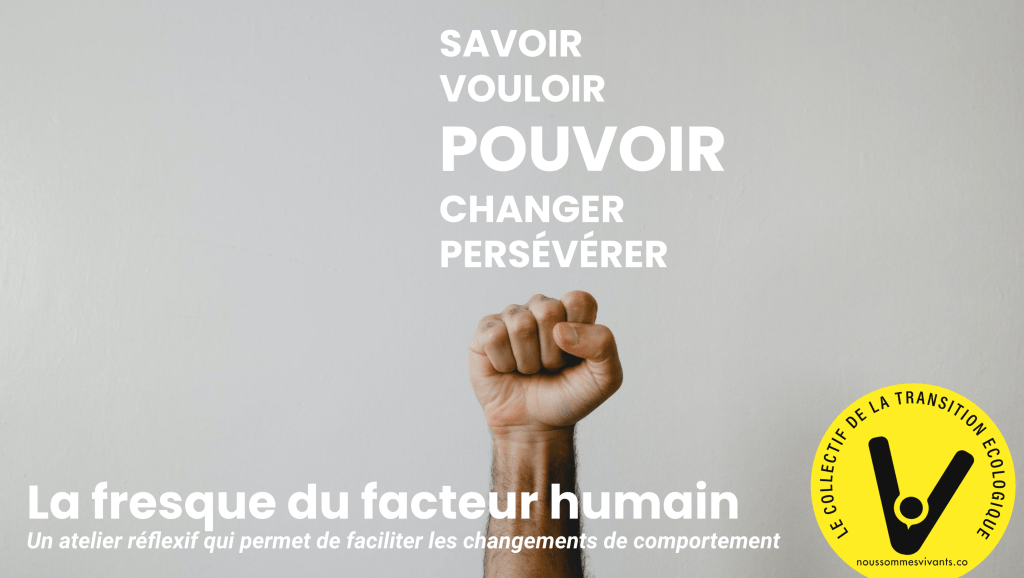
This practical landing module integrated into the animation of the human factor fresco by Nous Sommes Vivants allows you to get moving in 5 steps and/or to support a group in its efforts towards a new behavior.
Two behavioral scientists, Prochaska and Di Clemente, have theorized a 5-step method of supporting change inspired by their understanding of addictive behaviors.
- KNOWLEDGE (Pre-contemplation): The patient does not believe they have any problems with their consumption. They do not plan to change their behavior, which they essentially feel benefits from.
- WANTING (Contemplation): At this stage, ambivalence begins to manifest. The patient considers a change in behavior, but is reluctant to give up the benefits of the current situation. This is called decisional balance, which involves comparing the pros and cons of a change with those of their current behavior.
- POWER (Preparation/Determination): At this stage, the patient feels ready to start the action phase in the near future; he determines decisions and begins to implement them in time
- CHANGE (Action): Change is committed to lifestyle modifications. The difficulties are significant.
- PERSEVERE (Maintenance): During this consolidation phase, caution is advised as there are many temptations to return to the problematic behavior.
(Relapse) Relapse is possible and is a normal part of the change process.
Following these 5 steps in a sequenced manner (or not) allows everyone to anchor new behaviors over time in favor, for example, of biodiversity on land and in the seas, the climate or better consumption.
Ask us for a quote for a tailor-made session
We are deploying the Human Factor Mural in businesses and local communities to facilitate behavioral changes as part of a cultural transformation.
The Human Factor mural was designed by Humans Matter with contributions from Jérémy Dumont. It is supported by the Human Factor University association.
Engie case study: 3 themes deployed, 50 sessions since 2022 (HERE)
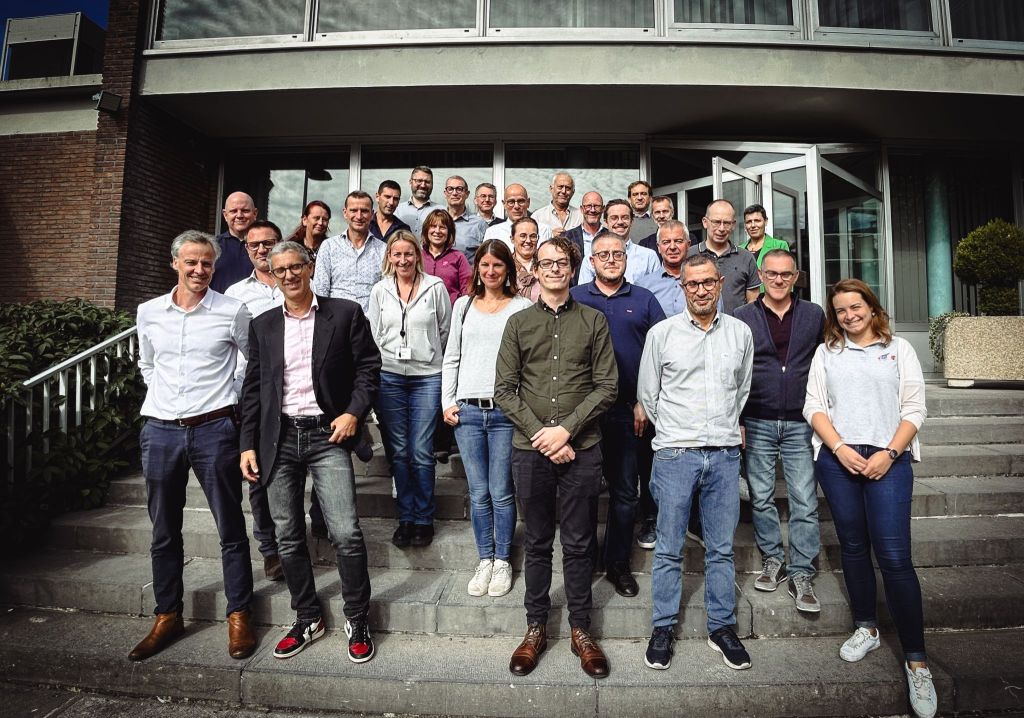
- Health/safety: Adoption of life-saving measures
- The fresco deployed on a large scale as one of the tools of the PEPS (People Committed to Health) program
- Diversity: Opening up to cultural richness
- The fresco as an awareness workshop in the group on diversity issues with HR
- Collaboration: Collective efficiency with designers
- Deployment across 3 communities
- Cybersecurity
- YPN (Young professional network)
- Women in tech
- Deployment across 3 communities

Articles to go further
- The human factor as an understanding of the unconscious mechanisms of behavior change
- Countering Cosmic Denial by Mastering Cognition ! The Different Factors of Behavioral Change in the Face of Ecological Issues.
- Moving away from constraints as the only way to adopt responsible behavior in the face of ecological challenges
- Moving beyond predatory relationships: lessons from cognitive science
- Popular ecology
- The area of interest, opening towards the imagination
What people who have experienced it say
“We left with the keys to strengthening our ability to act and implementing the new behaviors we wanted to adopt to achieve the goals we had set for ourselves.”
— President of an SME
“The human factor fresco helps you better cope with the difficult situation we find ourselves in when we want to change but can’t, and when we know the reasons for the discomfort, it becomes more bearable.”
— Participant
“I was looking for a human-centered strategy to mobilize my team and I came away with a 5-step strategy to support the internal transformation.”
— HR Director
“We can clearly see the collective mechanisms in which social groups are caught. Now I understand these mechanisms better and how to bring about collective change.”
— Innovation Director
 NOUS SOMMES VIVANTS, LE COLLECTIF DE LA TRANSITION ÉCOLOGIQUE
Laisser un commentaire